Probably brain was managing not only human behavior but also whole relation of human with the surrounding environment; before human became aware of the brain. And this was the brain who was investigating mankind; before mankind start to investigate the brain. Evidence came from some 7000 years ago; when ancient Egyptian start mummifying technique for corpse. This technique provided considerable knowledge about human body as well as brain. Mummifies were not only mummifying the dead body; also were acting as medics for life body.
Holes in skull of some distinguished mummies show that Egyptian was using their knowledge as a medical process to include their gained knowledge in treatment of the ill person.
3500 years ago ancient Greek although developed greatly in the field of medical as well as philosophical schools; however, physics of the brain as well as it’s relation to the philosophical issues remind silent. Another 1000 years were passed; and year 2500 Romans although gain considerable knowledge of anatomy via dissecting corpse of scarified gladiators; had no sufficient tool to dig into the brain.
It was 1890 that Ramon Y Cajal showed the pictures of neurons and their dendrites under the microscope. Development of research instruments and methodology allowed researchers to gain progressive knowledge of both brain anatomy and physiology.
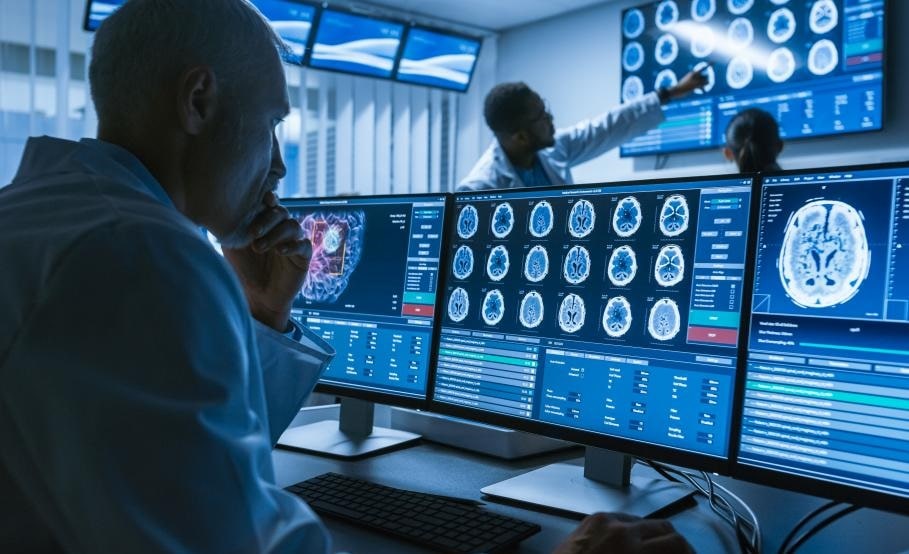
For anatomy, although clinical methodology such as CT scan and MRI were used in clinic to pinpoint the damages and/or deformations in brain and spinal cord; were unable to produce acceptable knowledge in cellular and/or molecular level. Probably gathering knowledge of brain physiology stared by recording of action potential from giant axon of the squid by Alan Hodgkin and Andrew Huxley, which have given a root to the neurophysiology or electrophysiology.
Continuing development in fascinating techniques and methodology in one hand and gathering of considerable data not only in the physic of brain but also its relation to the logical and emotional aptitude such as thought, language, filling punishment and/or pleasure by scientist on the other hand yield to the branch of science so called brain science or “Neuroscience”.
Oxford University was one of early established institution that owned a department of neuroscience; where A. Vahabzadeh was combined microdialysis technique with neurochemical methodology for monitoring neurotransmitters changes against stress in the hippocampus in f mole level (10 in power of -12 moles) at Marianne Fillenz laboratory; which was under the leadership of Colin Blakemore.
These days fascinating clinical methodology such as functional MRI as well as PET scan can produce reliable data in brain-behavior via neuroscientific investigation; which were carried out by neuroscientist around the word including Iranian present neuroscientist generation such as N. Dehgani, A. Hadipor, and F. Valaei ex-student of A. Vahabzadeh.
Neuroscience consist of two part of Neuro and Science; which means is a research discipline; and neuroscientist is a research worker who produce neuroscientific data; however, this not include medical professionals who use the neuroscientific finding in their profession without contribution to the brain research. Neuroscience degree is obtainable via biological as well as medical primary degrees in the neuroscience departments of the most universities around the world.